For on-site constructed solutions, the guidelines are as follows. Regardless of the method, when quantifying these elements and their associated finishes using models, it's crucial to consider the net square area (m² or ft²) as the quantification unit, considering that all voids are already accounted for in the model.
Early Estimation Methods
During the early estimates, one of either of these methods can be performed:
- Use the Room information to derive the quantities of the walls, floor, ceilings, and their finishes.
- Develop a model using multi-layered objects and applying average prices to the element composition.
Advanced/Detailed Modeling
For more accurate and detailed quantities of on-site constructed elements, especially during more advanced project stages, it's essential to model walls, floors, ceilings, and their finishes as distinct single-layered objects.
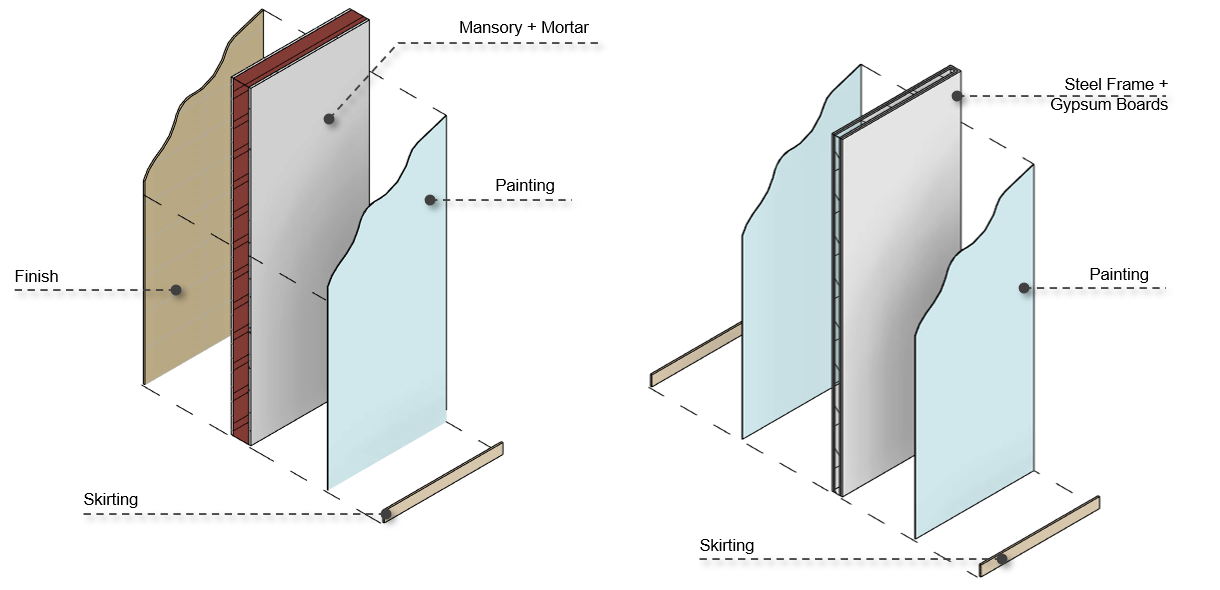
Figure 08 – Example of walls modelled as single separate-layered objects.
In this approach, each material should be represented by a separate model element, differentiating the core construction element from the finishes that may be applied to it.
However, for composite construction elements that typically have a standardized composition, such as a drywall steel frame with gypsum plasterboards, modeling them as layered elements is feasible.
-
Example A (Masonry): Illustrates a masonry wall element (comprising three layers: mortar + masonry + mortar) with a tiling finish element (single layer).
In this scenario, the tiling finish extends 10cm above the ceiling. -
Example B (Drywall): Illustrates a drywall element (consisting of three layers: gypsum board + steel frame + gypsum board) with a paint finish element (single layer).
The paint finish extends to the ceiling.
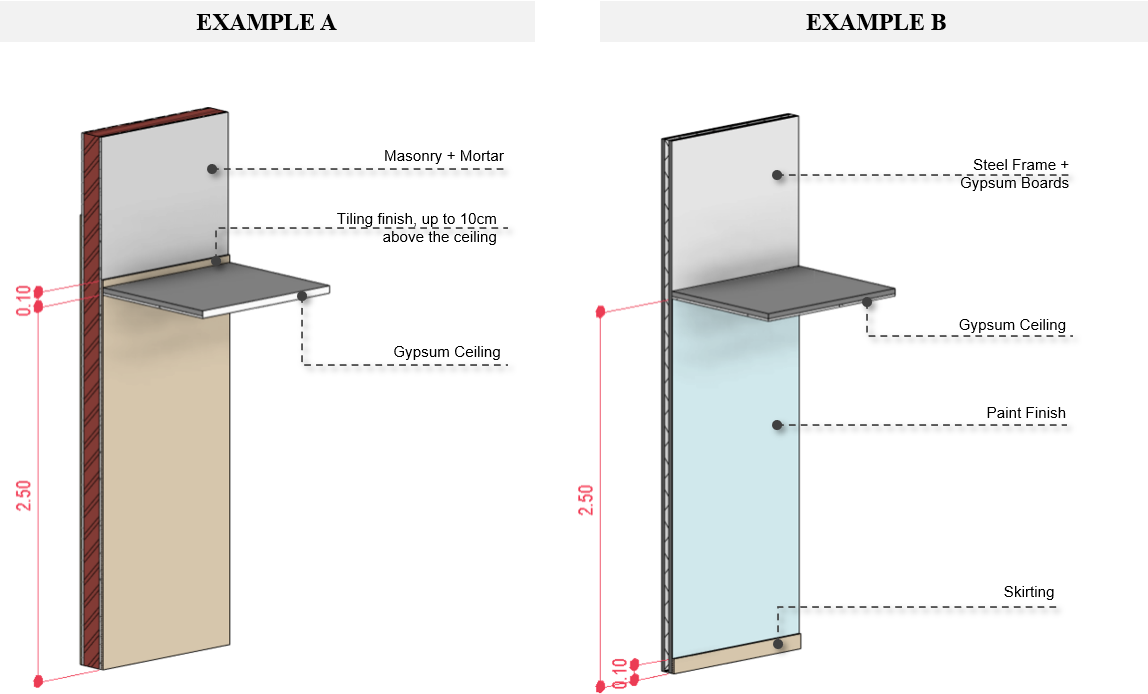 Figure 09 - Examples of single separate-layered walls, considering the height according to each constructive need of each material.
Benefit: This separation method allows better control over the modeling considerations specific to each material, resulting in more accurate quantities.